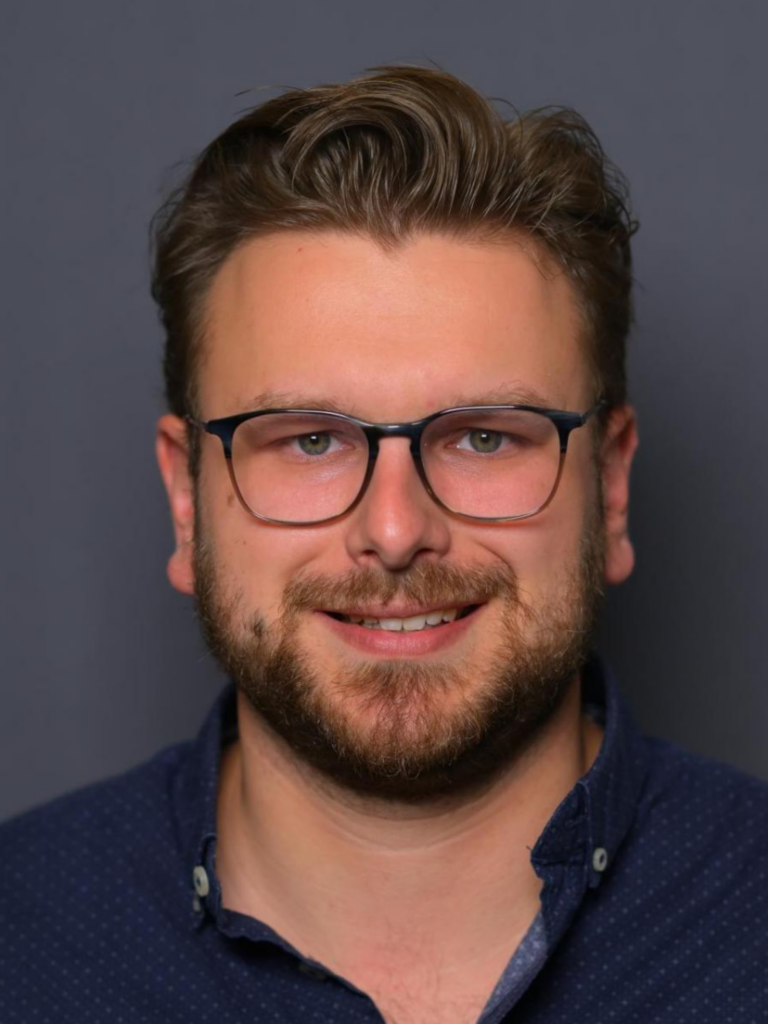
I joined the MMNI group in November 2025 as a PhD student. I am highly interested in the dopaminergic and serotonergic system and how it affects motivational components in Parkinson patients. I am also involved in the implementation of the DoMoCo II study.
I started my PhD journey with the MMNI group in August 2025. My research aims to describe neurotransmitter signatures of resilience in Parkinson’s disease (PD). Furthermore, I’m particularly interested in the effects of lifestyle on motor and cognitive function. To look into these aspects of the disease, I combine neuroimaging methods such as DaT SPECT and MRI with clinical data, motor and cognitive test results, and self-reported questionnaires on lifestyle.
I am a postdoctoral researcher in the MMNI group with a background in cognitive science and artificial intelligence. My main research interests rely in the AI-driven generation of biomarkers from existing patient data to not only better understand neurodegenerative diseases, but also to enrich the diagnostic and prognostic process thereof. I am also involved in the automation and standardization of data operations in our lab.
I am a PhD student in the MMNI group and joined the lab in April 2025. I am interested in the neurobiological underpinning of Parkinson’s disease and their involvement in motivation. I work with neuroimaging methods ranging from functional MRI to QSM data. I program behavioural tasks to test the relationship between motoric effort and motivation during the early phase of Parkinson’s disease.
My scientific curiosity is directed at structural and molecular determinants of brain function in health and disease. I am particularly invested in applying and combining molecular and functional imaging methods to understand mechanisms of pathology in neurodegenerative diseases, such as Parkinsonian Disorders and Alzheimer’s disease. I am also highly engaged in the translation of research in my field from basic to clinical science and the deployment of more advanced clinical standards of neuroimaging. For example, I coordinate national and international groups for the harmonization of imaging standards and organize a symposium on translational molecular imaging in neurodegeneration (MINC symposium).
As a leader of this group, I am dedicated to empowering young scientists to find their vocation and to achieve their full professional potential.
I joined the MMNI lab as a PhD candidate in January 2022. I am interested in resilience mechanisms in PD. For this purpose, I work a lot with resting state fMRI together with dopamine sensitive PET imaging. By using multimodal approaches I investigate the mechanistic link between dopaminergic degeneration and alterations in dynamics of large-scale functional networks. Furthermore, I am highly involved in the implementation of the currently ongoing DoMoCo study. Finally, I am committed to building and maintaining a reliable IT structure for the MMNI lab.
Ask me about: Coding in Python and R. Resting state fMRI techniques, such as dynamic functional connectivity, graph therory and basically any IT related issues.
I joined the group in 2019 and am currently pursuing my PhD. With a background in biochemistry and neuroscience, my research focuses on resilience mechanisms and disease progression in Parkinson’s disease. I work on imaging-based monitoring using DaT-SPECT to better understand how motor and cognitive symptoms evolve over time. I’m also interested in improving quality standards for the use of AI in medical research.
In the team, I’m responsible for programming experimental tasks (both fMRI and computer-based), managing technical equipment, and supporting statistical analyses. Outside the lab, I enjoy sharing science with the public and regularly take part in science slams to make neuroscience more accessible and engaging.
Master of Science in Experimental and Clinical Neuroscience
2014-2018
University of Cologne
Bachelor of Science in Biochemistry
Professional Experience
Period
Institution
Role / Focus
2024
University of Iceland
Prof. Lotta Ellingsen Focus: Improving Parkinson’s Disease monitoring through denoising of clinical data and machine learning-based pattern recognition
2018–2019
Cologne Excellence Cluster for Aging and Aging-Associated Diseases (CECAD)
Research Assistant in the Quantitative Proteomics Core Facility
Ask me about:
Definitely ask me anything about mixed models—seriously. Also happy to talk about statistics in general, but fair warning: I love diving deep into these topics, so make sure you have time! Beyond stats, I’m always up for questions about coding in Python, graph theory, the PPMI dataset, or any of the technical challenges that come with running our studies.
I am a resident physician in the Department of Neurology and a clinician scientist in the MMNI group. I have been working in the MMNI group for almost ten years. My main research area is molecular imaging of atypical Parkinsonian syndromes with a special focus on Tau-PET in progressive supranuclear palsy. Additionally, I use Tau-PET imaging in IgLON5 and I am also interested in examining nonmotor symptoms in Parkinson’s disease with multimodal imaging. I am the study physician of our DoMoCo study. My clinical focus is movement disorders, botulinum toxin therapy, and neurological intensive care medicine.
I’m a trained cognitive scientist and neuropsychologist, who has been working in the MMNI lab for almost 10 years now. My PhD was focused on the role of education and functional connectivity on tau spreading in Alzheimer’s disease. As a postdoc and now deputy group leader, I use behavioral, wearable technology and multimodal neuroimaging methods to investigate the neural mechanisms underlying resilience and resistance towards the two extremes of the aging process, namely super aging and pathological aging such as Alzheimer’s disease. Aside from my research interest, I’m mentoring medical students and PhD candidates and try to share my wisdom 😉
I am a neuroscientist and scientific project manager in the MMNI group and at the Research Center Jülich interested in improving our understanding of pathogenic and therapeutic mechanisms in neurodegenerative diseases, in particular Alzheimer’s and Parkinson’s disease. I coordinate a variety of investigator-initiated studies and industry-sponsored trials, ultimately aiming to improve patient therapy and care. In this context, I support my team in organizational, regulatory, ethical and legal questions. Finally, I am passionate about increasing the recognition for data collection and sharing within the neuroimaging community.